|
The Israeli foreign minister Gideon Sa'ar, who is of Argentinean Ashkenazi descent, promptly imposed the ban on Polanski from entering the Israeli-colonized territory. But the voting is exactly the opposite of a forced revocation of a UN resolution:
The United Nations General Assembly Resolution 3379, adopted on November 10, 1975, determined that Zionism is a form of racism and racial discrimination. It passed with 72 votes in favor, 35 against, and 32 abstentions, largely supported by the Soviet bloc, Arab League, and Non-Aligned Movement. However, the resolution was revoked in 1991 due to diplomatic pressure from the United States and the Israelis.
The difference between the two votes is that those of the British Green Party are motivated by genocide, ethnic cleansing, and the creation of a dystopia in Gaza by the Israelis, while opposition in the party against the voting was criticism of the wording used, which conservative Jews labeled "anti-Semitism."
SEMITES
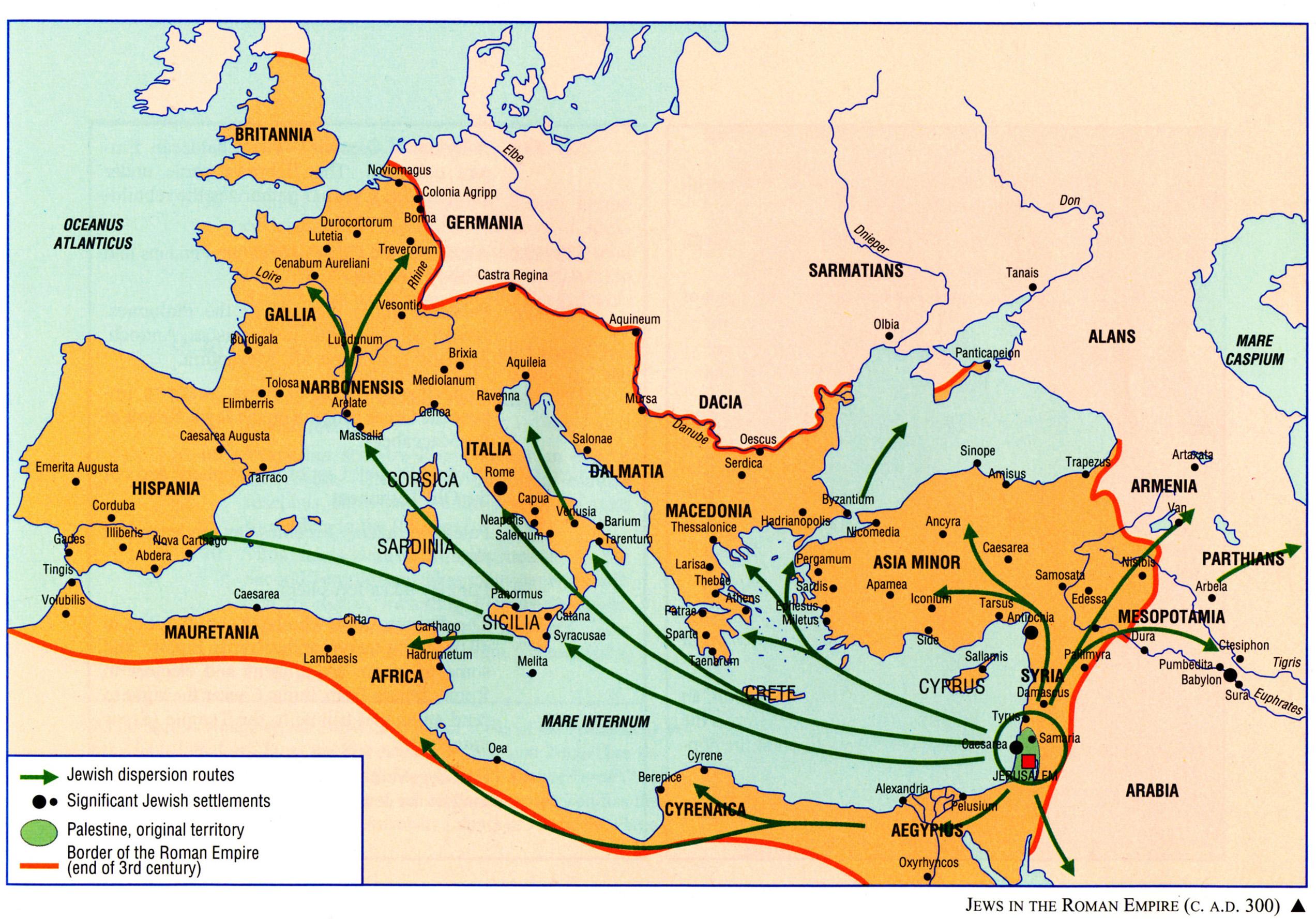 Well, Jews are not Semitic people, as their very distant forefathers fled Roman Palestine and lost their historical continuity of being Semitic people. With rebuilding new lives, one group went to the Iberian Peninsula, while the other group moved to Central and Eastern Europe via Italy and called themselves Ashkenazis, then naming the Iberian group Sephardic to distinguish themselves from them. Well, Jews are not Semitic people, as their very distant forefathers fled Roman Palestine and lost their historical continuity of being Semitic people. With rebuilding new lives, one group went to the Iberian Peninsula, while the other group moved to Central and Eastern Europe via Italy and called themselves Ashkenazis, then naming the Iberian group Sephardic to distinguish themselves from them.
Modern-day explanations about where Sephardic Jews originated refer to periods thousands of years after the exodus from Roman Palestine. For instance, French Sephardic Jews descend from North African Jews. They moved to Europe primarily during the mid-to-late 20th century, peaking between 1956 and 1967.
If a Spaniard or Portuguese brings all of his habits, customs, language, tradition, culture, religion, skills, knowledge, and themselves to South America to multiply and to distribute, does anyone call the descendants of them Spaniards or Portuguese? We call them Brazilians, Chileans, Argentines, Peruvians, Colombians, and so on.
The Roman-Palestinian Jews acted in much the same way, even though the context differed from that of the Spaniards and Portuguese who conquered South America centuries later. One might therefore reasonably ask: are Jews Semites? No, because that requires an unbroken historical continuity, defined as follows:
- You were born and raised in the Semitic region.
- You established a life there that was permanent in nature.
- You never left the region; you still live there today.
- You are neither a migrant, colonist, nor settler, nor are you descended from one.
How can Israelis be called Semites when they do not meet these criteria?
They were foreigners—much like those others—who first drove the British out of Palestine during the 1947–1948 civil war and subsequently proceeded to expel and massacre Palestinians (1948–1949).
During that period, the foreign intruders included no regular armies, only militias and terrorist groups:
The terrorist group Irgun (Etzel) consisted of members from Poland, Latvia, France, Germany, the United Kingdom, Romania, and Hungary. There was also an individual from Ireland who smuggled weapons into the British Mandate.
The Lehi terrorist group consisted of members from Poland, Austria, Bulgaria, and Ukraine.
And then there was the Haganah terrorist group, comprising members from Poland, Germany, Italy, France, Romania, Hungary, and Great Britain.
Nowadays, this even involves people recruited from all over the world—a practice that violates international law regarding military occupation. The majority are Americans, who constitute the largest group of foreign settlers in the West Bank. In the colonized area, more than 50% are actually descendants of German Ashkenazi Jews.
Biblical roots
 Where do the Israelis have their name from? Where do the Israelis have their name from?
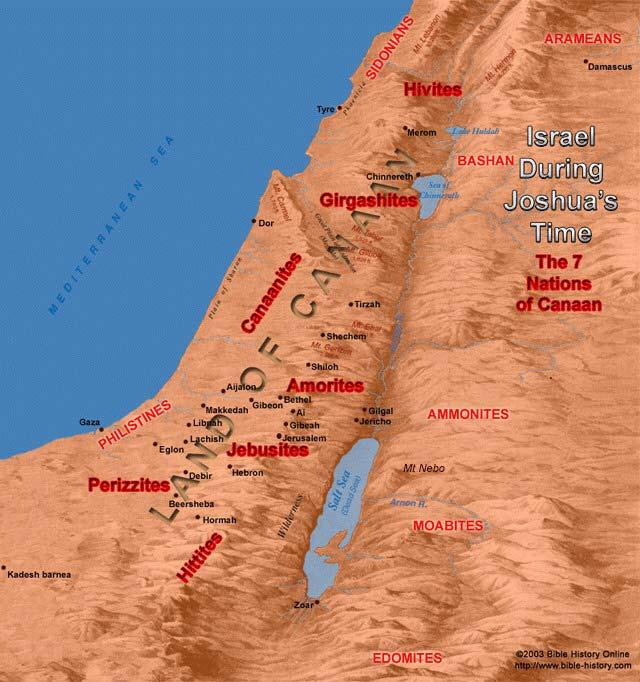
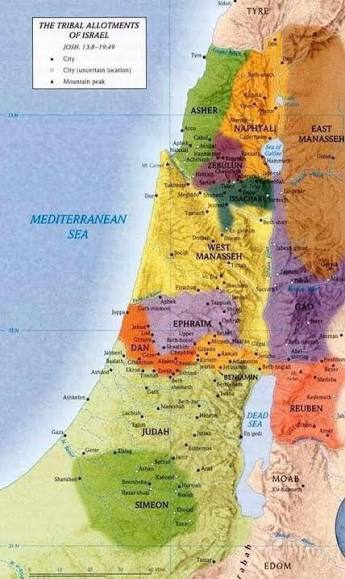
The name 'Israelis' is derived from a tribe—the Israelites—led by two biblical figures, Moses and Joshua, who conquered Canaan from two directions.
Moses first invaded the territory of the Amalekites from the Sinai Desert; his people killed women, children, and livestock. Netanyahu reversed the narrative in October 2023 by saying, "Do not forget what the Amalekites did to 'us'." Joshua invaded Canaan from the east by crossing the Jordan River.
No one seems to know—and the Israelis do not want you to know—that the Israelites were not Jews during their conquest of Canaan. The Jewish religion did not yet exist at that time. The religion only emerged generations later, after Abraham and his Hebrew tribe—who were also not Jews at the time of their trek from Ur in southern Mesopotamia—had arrived in Canaan and joined other tribes to reach a covenant to accept god.
Which tribes were already there?
Hittites, Girgashites, Amorites, Canaanites, Perizzites, Hivites, Jebusites, Anakites, Philistines, Arkites, and Arvadites.
The Israelites still had to arrive via conquest from the south (Moses via the Sinai Desert) and from the east (Joshua via the Jordan River). The Hebrews arrived via the south of present-day Lebanon after a long trek.
This implies that Hebrew was not originally a Jewish language, but rather a local language from the region of Ur—the area around present-day Basra in southern Iraq. Abraham and his people brought the language with them to Canaan.
That is why I reject the following statement:
|
"Hebrew was considered the language of the Jewish people from its earliest attestation in the 10th century BCE (or possibly the 12th century BCE), when it was the native language of the Israelites in the kingdoms of Israel and Judah."
|
 The phrasing should be: "Hebrew was adopted as the language of the Jewish people." The question, however, is: when was Hebrew adopted? Was it when the covenant was established? The phrasing should be: "Hebrew was adopted as the language of the Jewish people." The question, however, is: when was Hebrew adopted? Was it when the covenant was established?
Then, there was no unified people, bearing a single collective name—but rather tribes that each bore their own name and spoke their own language, even during the time of the Kingdom of Israel.
How did I come by this information?
The information dates back to when AI and AI chatbots didn't exist. Tech giants allowed users to publish whatever they pleased on their platforms without interference. Facebook was simply Facebook, and X was the free Twitter.
A time when information was manipulated only on online encyclopedias like Wikipedia—a time when collecting such information required many hours and days to spend. It took me five years!
ZIONISM
The term 'Zionism' is derived from the name 'Zion', a hill in Jerusalem. Originally, it referred to a Jebusite fortress that was conquered by the Israelite King David and became the City of David.
The question arises: why does the name of a hill serve a different purpose?
Historically, the term 'Zion' has functioned as a powerful synecdoche for the entire city of Jerusalem, for 'Israel', and for the spiritual and 'national identity' of the Jewish people. If the latter is the case, the question arises: why did only followers of Zionism migrate to what was then the British Mandate for Palestine?
Zionism is a movement that was named by Nathan Birnbaum in 1890 and formalized as a political ideology in 1897 by the Hungarian Theodor Herzl. The ideology drew upon this ancient biblical and literary usage to symbolize the quest for Jewish self-determination and the restoration of a Jewish homeland.
By using the term "Zion," the movement linked its modern political objectives to the deep religious and historical roots of Judaism, in which Zion represents not merely a physical location but also the focal point of Jewish life and the promise of redemption.
Influenced by rising European antisemitism, Theodor Herzl published *Der Judenstaat* in 1896 and convened the First Zionist Congress in Basel in August 1897, establishing the Zionist Organization to pursue a Jewish homeland in Palestine. It remains unclear to me who the American visitor was that took the ideology back to the United States after the congress. The country has been Zionist since 1898, which explains, among other things, why Americans and Israelis are so closely aligned.
However, in the first half of the 20th century, Zionism had a non-violent, political character. This changed after the Six-Day War in June 1967. Zionism began to take on an aggressive nature; it became militant and "religionized." In the 21st century—and particularly since October 7, 2023—the ideology has transformed into a weapon against anyone holding a dissenting opinion, utilizing various tools such as money and technology. It has become a form of information warfare driven by self-preservation.
RACISM & DISCRIMINATION
Let us return to the introduction of this article. After all, the question is: Do we really need a resolution to define what Zionism is?
According to the British Green Party, Zionism constitutes racism and discrimination. I believe this view conflates issues. After all, distinguishing between people and/or deeming people unwelcome based on race, origin, or religion is part of Zionism.
In other words: racism is the belief that groups of people possess different behavioral traits based on innate characteristics, leading to the notion that one race is superior to another. It functions as a system of power structures accompanied by hostility toward people based on their ethnic background, skin color, or national origin.
It makes no difference to me whether an Israeli is a "politician," a government official, a member of the military, or a civilian. My archives contain documented videos clearly showing that it is primarily Israeli hardliners and extremists who are racist.
Discrimination involves the unequal treatment, disadvantaging, or exclusion of people based on personal characteristics that are irrelevant in a specific situation.
However, racism and discrimination blur—or even vanish—when the view that certain people are irrelevant turns into the termination of their existence. That is why, in my view, what is happening in Gaza is no longer racism or discrimination; it is something worse. It is genocide.
Racism is visible in the West Bank; no matter how vehemently Israelis deny it, it is simply there to be seen. Just look at the behavior of those unruly colonists: primitive, aggressive, and violent—even brutal. The videos they post online themselves prove this.
Encouragement in various forms—such as that coming from Itamar Ben-Gvir—also serves as evidence of racism. Describing Palestinians as "human animals" (as Yoav Gallant did in the first week of November 2023) is not only racist but also demonizing. And that is not to mention the attempts to equate Palestinians with Nazis.
In the West Bank, discrimination is in various forms and serves one purpose: to benefit only the colonists. A few examples:
There is no instance of violence committed against colonists by Palestinians on their own initiative. All acts of violence by Palestinians are defensive reactions to violent actions by colonists. Yet, it is the Palestinians who are arrested, while the actual perpetrators go free.
And while I am on the subject of the Israeli "legal system": there are two such systems—one for the occupied population, which operates entirely differently from the system for its own citizens. Such unequal legal treatment constitutes discrimination.
Apartheid is commonly equated with racism. However, in the West Bank, I frequently observe that racism can simultaneously be discrimination:
The established checkpoints—of which there are more than 300—do not exist for the safety of the illegal settlers. These checkpoints are nothing more than a means to deliberately restrict the freedom of movement of Palestinians to enhance the freedom of movement of their own people. Roads constructed in the occupied territory by the occupying power—or even by colonists—amount, under international law, to a partitioning of the occupied territory. Palestinians are prohibited from using these roads, even to cross them when their land lies on the other side.
Other visible examples in the West Bank clearly demonstrate the presence of racism and discrimination.
Zionism is not explicit racism or discrimination. The examples show that the ideology is racist and discriminatory towards Palestinians and even Arabs, but to a certain level.
In religious terms, Zionism discriminates against all non-Jews. Dozens of video recordings collected since October 2023 demonstrate that discrimination against non-Jews occurs primarily in Jerusalem.
Nevertheless, Israelis were furious at the outcome of the vote within the British Green Party. They responded by imposing an entry ban on the party's leader, Zack Polanski —even though he had not participated in the vote.
The Israeli reaction comes as no surprise. It fits the pattern of playing the victim and always blaming the victim.
|
